Product Owner
Helps shape priorities, clarify requirements, and define what needs to be delivered.
Engineering Experience
The 12-Week Engineering Experience
This is a supervised engineering experience where students, software developers, AI engineers, Generative AI engineers, and developers seeking real open-source experience are onboarded into the rhythms used in real software teams: understanding requirements, breaking down problems, planning, development, code review, testing, pull requests, CI/CD awareness, documentation, and delivery.
Apply NowThe first week is focused on onboarding. Participants set up their environment, understand the project, read requirements, learn the contribution process, meet the working rhythm, and understand expectations.
From week 2 onward, the programme works like a real engineering project. Participants do not follow isolated weekly lessons. They work through real issues, investigate context, think through possible solutions, develop features or fixes, raise pull requests, receive code review, test changes, improve their work, and contribute to open-source projects under the supervision of senior software and AI-aware engineers where possible.
These activities repeat across the 12 weeks, just like in a real software team. Problem analysis, planning, development, review, testing, documentation, and delivery happen continuously rather than as separate classroom topics.
Participants are not left alone to figure everything out. They work under the supervision of senior developers, AI-aware engineers, and, where possible, software architects who help them understand the problem, the code, and the engineering judgment behind a responsible solution.
Helps shape priorities, clarify requirements, and define what needs to be delivered.
Supports the working rhythm, helps remove blockers, and keeps the team aligned.
Guides technical direction, system design, maintainability, and long-term thinking where possible.
Reviews code, mentors participants, explains trade-offs, and supports software and AI-aware engineering quality.
Works on real issues, asks questions, reasons through solutions, contributes code, responds to feedback, and builds confidence through practice.
Supports quality by checking functionality, reliability, edge cases, and expected behaviour.
This is not a lecture-based course.
This is not a set of weekly classroom topics.
This is not tutorial watching.
This is not toy project work.
This is not syntax practice without real engineering context.
This is not about memorising code without understanding the problem.
This is not a shortcut to experience without real contribution.
This is not passive learning without feedback, review, and improvement.
It is a supervised engineering environment designed to give participants real-world exposure to problem solving, software engineering, AI engineering, and open-source workflows through guided contribution.
Students, software developers, AI engineers, and Generative AI engineers grow faster when they work inside real systems, receive feedback, and see how professional teams make decisions. Syntax matters, but it is not enough. Participants practise the behaviours and habits of real engineers: understanding problems, breaking them down, making technical decisions, contributing to existing codebases, and improving work through review.
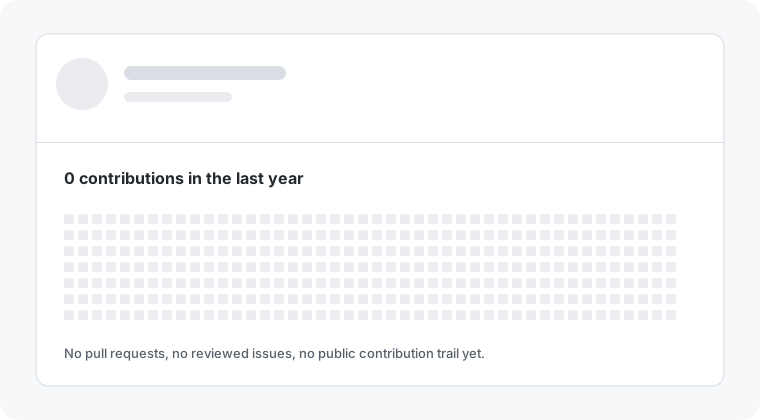
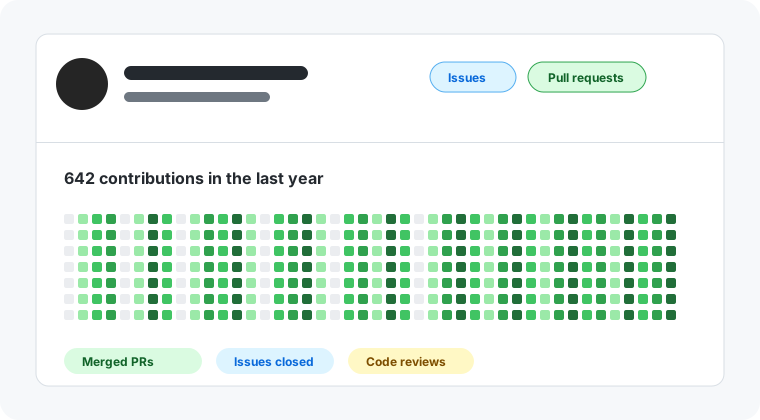
The goal is not to complete isolated exercises. Participants build visible evidence of real engineering activity: problems investigated, issues clarified, pull requests opened, code reviews received, and contributions improved through feedback.
The next cohort starts on 06 July 2026. The programme fee is £1,500 and each cohort is limited to 8 participants to keep the experience focused, practical, and personal.
Apply Now